

NIS2 & Incident Reporting
When incidents occur, it is no longer enough to simply “stay on top of things”
NIS2 is not only changing how organizations need to approach cybersecurity; it is also transforming the entire perspective on accountability, traceability, and incident management. For many Swedish businesses, it is no longer just a matter of having the right security tools in place. It is about being able to act quickly, in a structured manner, and with the right information when something actually happens.
This is also where many organizations realize that their current working methods no longer hold up. Information is scattered across different systems, incidents are handled manually, and there is no clear overview of which systems, services, and assets are actually affected by an incident. NIS2 places significantly higher demands on organizations to demonstrate control, not only technically but also in terms of processes.

What does NIS2 mean in practice?
The directive covers sectors including energy, transportation, healthcare, the public sector, manufacturing, digital infrastructure, and other critical infrastructure sectors.
In practice, this means that organizations need to be able to identify incidents more quickly, assess their impact more clearly, and report within established timeframes. In many cases, an initial alert must be sent within 24 hours, followed by a more detailed report within 72 hours, and then a final report with a root cause analysis and corrective actions.
This requires more than just security monitoring. It requires structure, clear lines of responsibility, and processes that function even when the organization is under pressure.
For many organizations, this is no longer a matter of recommendations or voluntary initiatives. NIS2 is a legal requirement that sets out clearer guidelines for how incidents must be handled, documented, and reported.
NIS2 also classifies operations into “essential” and “important” categories based on how critical they are deemed to be to society. This distinction affects, among other things, oversight, regulatory requirements, and the potential consequences of non-compliance; however, regardless of category, clear requirements are set for risk management, incident reporting, and security measures.
Learn more about how your business is covered by NIS2 on the European Commission’s official information page.
The Civil Defense Agency also provides a timeline that clarifies when various NIS2 regulations will take effect in Sweden. The most imminent is the regulation on incident reporting.
Why many organizations struggle to meet the requirements

What often slows down the work is not a lack of willingness to comply with regulations—but rather the lack of coherent processes.
We often encounter organizations where incident management still takes place via email, Teams threads, Excel, or multiple parallel systems. When an incident does occur, it becomes difficult to quickly obtain the right information: which systems are affected, who is responsible for the next step, or what actions have already been taken.
At the same time, asset management is becoming increasingly important. Without control over hardware, software, dependencies, and ownership, both incident analysis and reporting become significantly more difficult.
This is also why NIS2 efforts today often go hand in hand with major investments in ITSM solutions and processes.


Asset management is becoming a key issue
To be able to respond quickly in the event of an incident, organizations need to understand which assets are in use, which systems are business-critical, and what dependencies exist between business-critical infrastructure and services.
Therefore, areas such as Hardware Asset Management (HAM), Software Asset Management (SAM), CMDB, and clearer mapping of relationships between systems and services are becoming increasingly important for organizations that want to work in a more structured way with monitoring and compliance with NIS2.
When assets, services, and incidents are linked within the same platform, it becomes significantly easier to quickly gain a clear picture of the situation during an incident, understand which systems are affected, and obtain accurate information for reporting in accordance with NIS2.
Platforms that facilitate structured NIS2 work
Synerity with several leading ITSM and ESM platforms that support organizations’ NIS2 compliance efforts in various ways. What these platforms have in common is that they help create structure, traceability, and control in the management of incidents, assets, and processes.
How Synerity You Move Forward
At Synerity , we Synerity every day with organizations that want to streamline their incident management, ITSM processes, and compliance.
Our focus isn’t just on choosing the right technology, but on establishing workflows that work in practice. This means we help you find the right balance of processes, automation, and control based on the maturity and needs of your business.
We support you in:
Identify gaps in current work practices
Create clear and effective incident workflows
Improve traceability and documentation
Establish structures that facilitate compliance with NIS2 and other regulatory requirements
To illustrate this in practice, here is an overview of the platforms we use and how they can support our work.


HaloITSM
HaloITSM gives organizations better tools to approach incident management, documentation, and traceability in a structured way—areas that are becoming increasingly important as NIS2 requirements become more stringent.
The platform supports ITIL processes, automation, CMDB, and clear history tracking throughout the entire incident lifecycle, making it easier to follow up on incidents and generate accurate data for reporting.

HaloITSM also works closely with Lansweeper. Through the integration between the platforms, organizations gain a better overview of their IT environment, assets, and dependencies between systems and services.
In recent years, Lansweeper has established itself as a leading player in IT asset management and cyber asset intelligence, with a clear focus on regulatory requirements such as NIS2 and DORA. The platform helps organizations continuously map IT, OT, IoT, and cloud assets, as well as identify risks, vulnerabilities, and anomalies in their environment.
This makes it easier to quickly establish a clear overview of the situation during incidents, identify which business-critical systems are affected, and take a more structured approach to follow-up and regulatory requirements under NIS2.
Zendesk
Zendesk is most effective in situations where an incident affects many users, customers, or internal stakeholders simultaneously. The platform’s strength lies in its ability to collect signals, questions, and incident-related communication across multiple channels and convert this into structured cases, actions, and follow-ups. In an NIS2-related scenario, Zendesk can Zendesk serve as a controlled communication and resolution layer: users can report issues, cases can be classified and prioritized, approved responses can be reused, and the organization can track how communication has been handled over time.
What makes Zendesk relevant is its combination of AI agents, Copilot, a knowledge base, QA, and a growing ITSM/ITAM track. This creates opportunities to reduce noise in an incident, ensure more consistent communication, and identify SLA risks or policy gaps in the handling process.

Siit
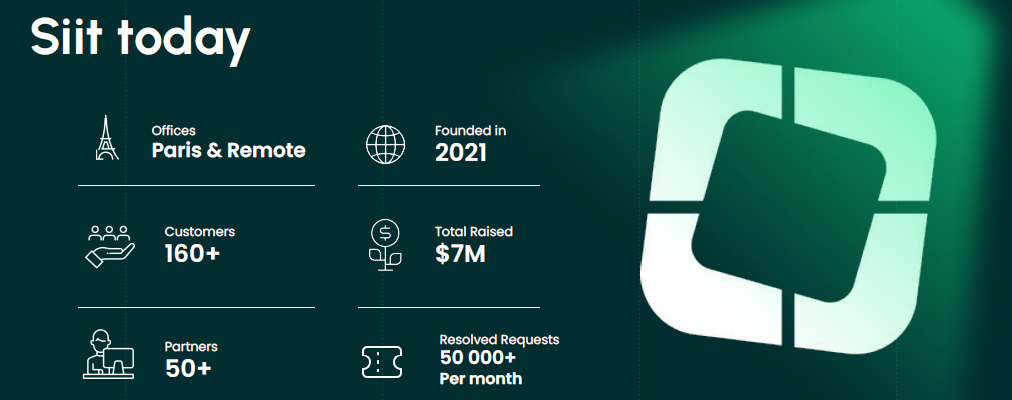
Siits strength lies in capturing incidents and anomalies where employees are already working, such as in Slack or Microsoft Teams. This makes the solution an attractive, low-threshold channel for early NIS2 signals: suspected phishing, incorrect permissions, abnormal device status, access issues, or disruptions in a business-critical service.
The unique advantage of Siit is that incident reporting doesn’t have to start with a blank form. The platform can gather context from sources such as identity management, MDM, HRIS, applications, access rights, and previous case history. This means that an incident response team can more quickly get a clear picture of who is affected, which device or access is involved, and whether the case needs to be escalated. For NIS2 work, the primary value lies in shortening the path from observation to structured incident data, while allowing actions, approvals, and internal information sharing to occur within a traceable workflow.
As a European platform, Siit is also well-positioned in relation to the requirements and context of the NIS2 Directive, which further enhances its relevance for organizations that need to ensure compliance within the EU.

Atomicwork
Atomicwork perhaps has the most unique approach through its AI Workforce and the ability to create AI Coworkers with their own roles, instructions, skills, tools, and control mechanisms. In NIS2-related work, this opens the door to building specialized AI agents for different parts of the incident lifecycle.
For example, an organization could create a NIS2 classification agent that assesses incident type, impact, and reporting relevance; an information agent that disseminates approved situation reports to the appropriate target groups; an evidence agent that compiles timelines, affected systems, and implemented measures; and a reporting agent that prepares documentation for management, auditing, and potential regulatory reporting. Atomicwork’s potential thus lies not only in automating individual cases, but in creating an AI workforce that can support classification, coordination, information dissemination, and reporting under human control.
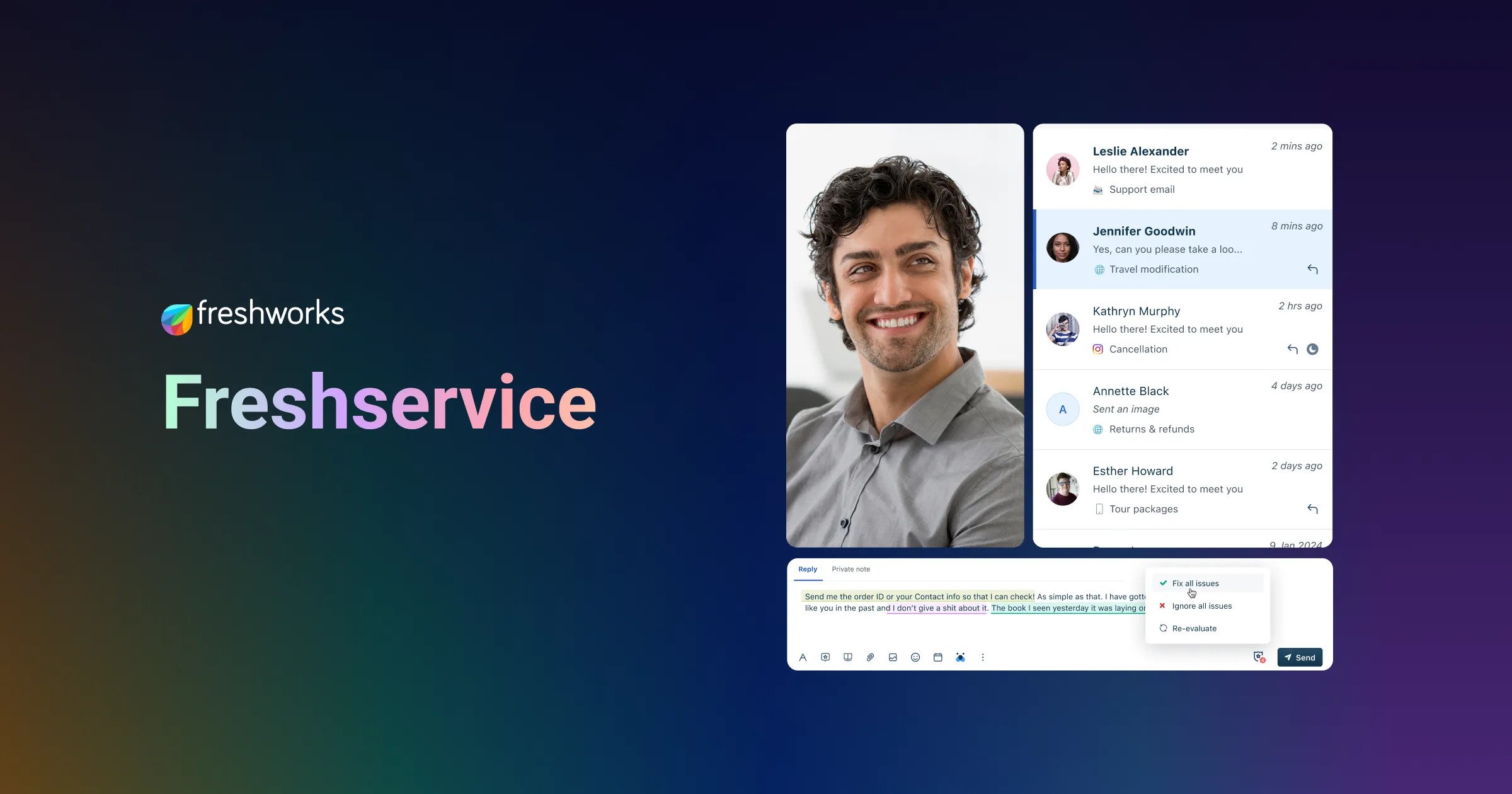
With Freshservice , organizations can create a more cohesive approach to incident management, access control, and documentation. The platform supports automated incident workflows, CMDB, asset management, escalations, and clear history throughout the entire incident management process. This makes it easier to track what has happened, which systems have been affected, and what actions have been taken.
Freshservice also recently expanded its offerings in IT Asset Management (ITAM) and Application Dependency Mapping (ADM). This gives organizations better opportunities to understand how systems, applications, and services are interconnected—something that is becoming increasingly important when incidents need to be analyzed and reported in accordance with NIS2.
At its core, NIS2 is about capability
The organizations that are most successful with NIS2 do not view it merely as a set of new requirements to comply with. Instead, they use the process as an opportunity to establish better controls, clearer processes, and more proactive approaches to reduce the risk of serious incidents, operational disruptions, and security-related outages.
How prepared is your organization for NIS2?
Many organizations today know that NIS2 will affect them—but are still unsure about which requirements actually apply. With the help of a modern ITSM platform, businesses can establish better structure, traceability, and clearer incident management—which simplifies compliance with NIS2 and strengthens the organization’s security, preparedness, and resilience.
This is where we at Synerity in. With extensive experience in ITSM and working with organizations that need to meet NIS2 requirements, we help businesses use technology to create scalable and value-adding workflows that result in better control, increased compliance, and solutions that make a real difference in day-to-day operations.